Shoulder Replacement Specialist · Glendale, AZ
Shoulder Replacement Surgeon in Glendale, AZ
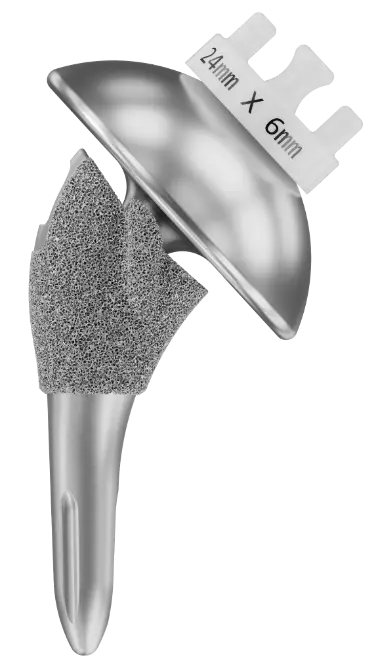
Shoulder replacement surgery (shoulder arthroplasty) replaces the damaged surfaces of the shoulder joint with an implant designed to relieve arthritis pain and restore function. Dr. James MacKenzie, a board-certified, fellowship-trained orthopedic surgeon at Arizona Sports Medicine Center at Abrazo Arrowhead Campus, performs total and reverse shoulder replacement in Glendale, Arizona, serving patients from Peoria, Arrowhead, Surprise, Sun City, and across the Phoenix West Valley. He uses the InSet® shoulder system from Shoulder Innovations, an implant design focused on socket fixation, historically a common cause of anatomic shoulder replacement failure.
When Shoulder Pain Stops Responding
Most shoulder problems do not need a replacement. Physical therapy, activity changes, injections, and arthroscopic procedures resolve many of the shoulder conditions Dr. MacKenzie treats. But when the cartilage in the joint itself has worn away, or a long-standing rotator cuff tear has changed the mechanics of the shoulder, those measures may eventually stop working. Pain that wakes you at night, stiffness that makes it hard to reach a cabinet or fasten a seat belt, and grinding with every movement can be signs that the joint surface, not just the soft tissue around it, is the problem. That is when shoulder replacement becomes a reasonable conversation.
What Is Shoulder Replacement (Arthroplasty)?
In shoulder replacement surgery, the worn surfaces of the ball-and-socket joint are removed and replaced with smooth implant components. Depending on the condition of your rotator cuff and bone, Dr. MacKenzie may recommend one of two approaches: anatomic total shoulder replacement, which recreates the shoulder’s natural shape and relies on a healthy rotator cuff, or reverse shoulder replacement, which switches the positions of the ball and socket so the deltoid muscle can power the arm when the rotator cuff cannot. Not sure which applies to you? Read our total vs. reverse comparison.
Am I a Candidate?
Candidacy comes down to three questions: how much the joint surface is damaged, what shape your rotator cuff is in, and what you have already tried. You may be a candidate for shoulder replacement if you have advanced shoulder arthritis, rotator cuff arthropathy (a large tear that has led to arthritis), avascular necrosis, a complex fracture of the upper arm bone, or a previous shoulder surgery that has failed, and if pain and loss of function continue despite a fair trial of nonsurgical care. An exam, X-rays, and usually a CT or MRI give Dr. MacKenzie what he needs to tell you honestly whether replacement is the right next step, and which type.
The Implant: Why Dr. MacKenzie Uses the InSet® System
Dr. MacKenzie performs shoulder replacement using the InSet® system from Shoulder Innovations, a company focused exclusively on shoulder replacement. The InSet® design takes a different approach from traditional implants: the socket-side component is seated into the bone rather than on top of it, a design intended to improve stability and reduce the rocking forces associated with implant loosening. The humeral components are designed to preserve bone, which may keep future options open if the shoulder ever needs further surgery. The system is available in anatomic total and reverse configurations, so the implant philosophy stays consistent whichever procedure your shoulder needs.
What to Expect: From Consultation to Recovery
Every patient’s plan is different, but the arc is similar. Before surgery, imaging is used to plan the procedure around your specific anatomy, often with CT-based 3D planning software. The surgery itself typically takes one to two hours, and depending on your health and home support, many patients go home the same day or after one night. A sling protects the shoulder for the first several weeks while physical therapy restores motion, then strength. Many patients are back to desk work within a few weeks, to driving once out of the sling (often around six weeks), and to golf, swimming, and similar activities around three months, with improvement continuing through the first year. Individual results vary.
Risks and Honest Expectations
Shoulder replacement is not the right choice for everyone. Like any surgery, it carries risks, including infection, implant loosening or wear over time, nerve injury, stiffness, and, particularly with reverse replacement, dislocation. Dr. MacKenzie will discuss these openly, along with what you can realistically expect for your shoulder, so the decision is fully yours.
Why a Fellowship-Trained Surgeon in Glendale
Dr. MacKenzie is a board-certified orthopedic surgeon who completed his residency at The Johns Hopkins Hospital and a sports medicine fellowship in Miami, where his training included total shoulder arthroplasty and complex shoulder reconstruction. His practice at Arizona Sports Medicine Center covers the full continuum of shoulder care, which means replacement is never the reflexive answer: patients who can be treated arthroscopically or nonsurgically are, and patients who need a replacement get a surgeon who performs both anatomic and reverse procedures. His office at Abrazo Arrowhead Campus is minutes from Loop 101 and easy to reach from Peoria, Surprise, Sun City, and North Phoenix. Meet Dr. MacKenzie.
Questions
Frequently Asked Questions
Don’t see your question here? Our team is happy to help.
How do I know if I need a shoulder replacement?
Persistent pain and loss of function from shoulder arthritis or rotator cuff arthropathy, despite physical therapy, medications, or injections, are the most common reasons to evaluate shoulder replacement. Imaging and an exam with a shoulder surgeon help determine whether you are a candidate.
What is the InSet® shoulder replacement system?
InSet® is a shoulder replacement implant system from Shoulder Innovations. In total shoulder replacement, its socket component is seated into the bone rather than on its surface, a design intended to improve stability. For reverse replacement, the InSet® Reverse system uses a lateralized-lateralized design intended to improve range of motion. Both are designed to help preserve natural bone.
Is shoulder replacement an outpatient surgery?
For many patients, yes. Depending on overall health and support at home, shoulder replacement is often performed on a same-day or one-night basis. Dr. MacKenzie will discuss which setting is appropriate for you.
Does insurance cover shoulder replacement?
Shoulder replacement for arthritis or rotator cuff arthropathy is generally covered by insurance, including Medicare, when medically necessary. Coverage details vary by plan; our office verifies your benefits before scheduling surgery.
Where does Dr. MacKenzie perform shoulder replacement?
Dr. MacKenzie sees patients at Arizona Sports Medicine Center at Abrazo Arrowhead Campus, 6320 W. Union Hills Drive, Building B, Suite 1800, Glendale, AZ 85308, and operates at Abrazo Arrowhead Campus.
Schedule a Shoulder Replacement Consultation
If shoulder pain is limiting your life, an evaluation can give you a clear picture of where you stand and every option available to you.